Building a pool in Newcastle or the Hunter Region? The pool itself is just the beginning. The decisions you make about your surrounds will shape how the whole space looks and functions for years to come.
Top Tips • Latest News • Offers • Competitions • Prizes • Giveaways and lots more!!!

Top Tips
Latest News
Offers
Competitions
Prizes
Giveaways
And lots more!!!
There is a pattern that plays out more often than most homeowners expect. The pool goes in beautifully, the water is sparkling, and then comes the moment of looking around at the surrounding area and realising the hard work is far from over. Retaining walls that were not planned for. Drainage that runs the wrong way. A fence line that cuts off the flow of the space. Paving that now costs significantly more because the machinery has already left the site. It is a frustrating position to be in, and it is entirely avoidable with a bit of forward thinking during the planning phase rather than scrambling to fix things once the excavator has packed up and gone.
The good news is that right now, with an overcast and drizzly week settling over Newcastle and the Hunter Valley, you have the perfect opportunity to sit down, review your block, and get these decisions locked in. Spring build slots fill up fast, and the builders and landscapers you want are already booking out. Use this quieter weather to do the thinking that will save you real money and real frustration down the track.
Let us start with the decisions that genuinely need to happen before or during the build phase, because leaving them until after is where things get expensive and complicated.
Drainage is the one that catches homeowners out most often. When a pool is installed, the ground around it is disturbed significantly. If no one has thought carefully about where water will flow during heavy rain, or where backwash and splash water will go on an ordinary day, you can end up with pooling water against fencing, erosion in garden beds, or run-off heading toward a neighbour's property. A drainage plan does not need to be elaborate, but it does need to exist before the site is compacted and finished. Talk to your pool builder about surface grades, ag lines, and where water will naturally want to travel on your specific block. Newcastle and Hunter properties vary enormously in slope, soil type, and proximity to neighbouring lots, so a solution that worked three streets away may not be right for yours.
Retaining walls are the next consideration, and they are closely tied to drainage. If your block has any slope to it at all, and most Hunter Valley and Newcastle suburban properties do, the excavation for your pool will change the relationship between levels on your site. Sometimes a small retaining wall is all that is needed. Sometimes the scope is larger. Either way, designing and pricing these walls as part of the overall project is far more cost-effective than treating them as a separate job once the pool is finished. Machinery access, material delivery, and the ability to tie walls into existing footings all become harder and more expensive after the fact.
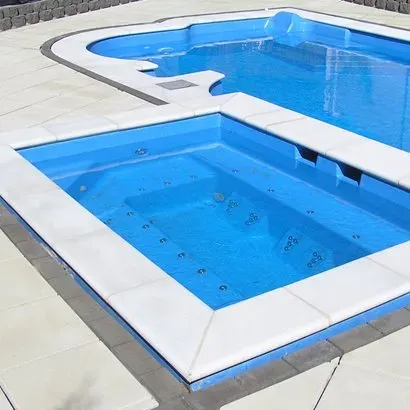
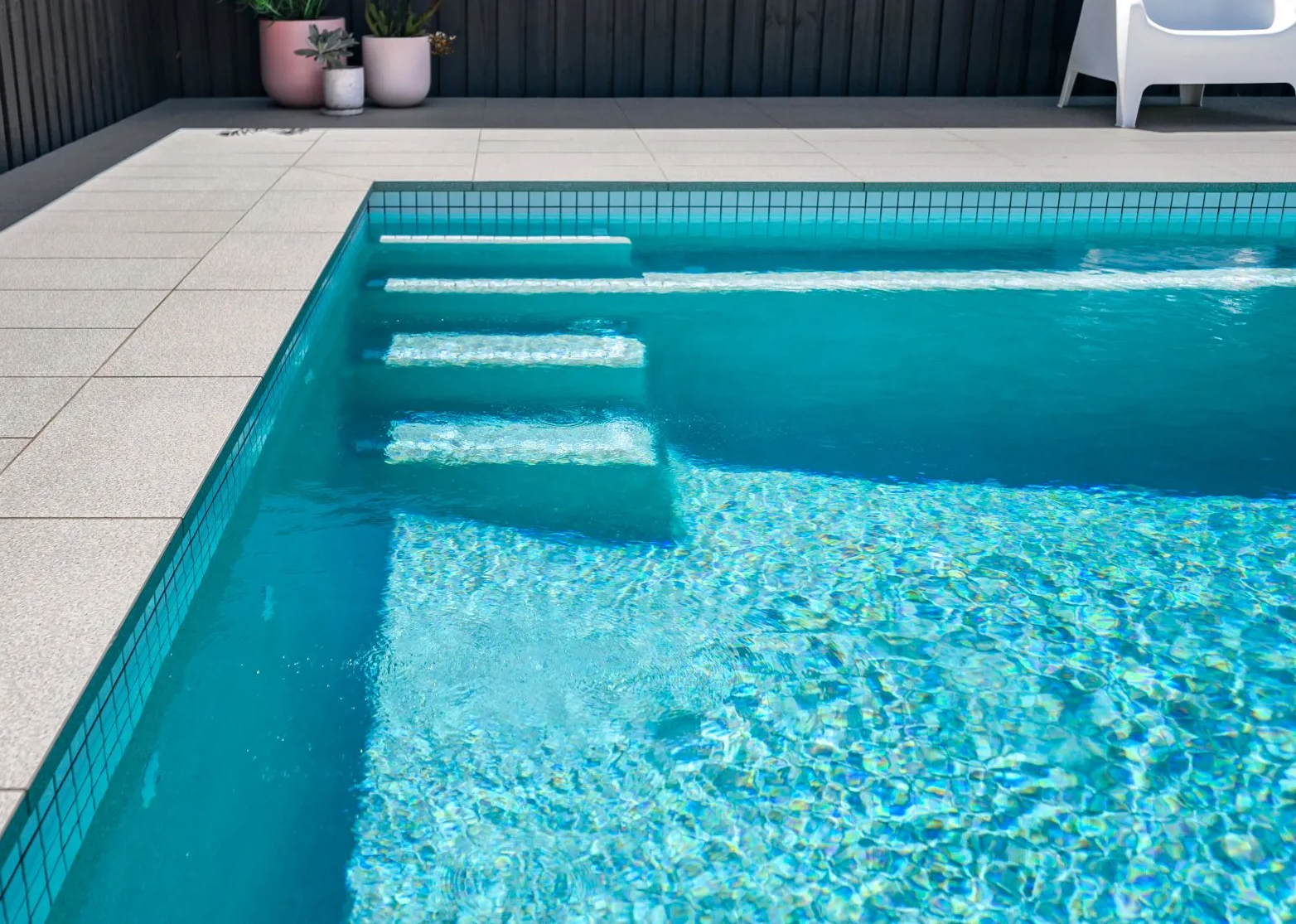
Coping is the material that edges the top of your pool shell, and it sits right at the intersection of function and aesthetics. It is what your hands grip as you push off from the wall, what your feet walk across getting in and out, and what frames the visual appearance of the pool from every angle. Choices typically include natural stone such as sandstone or travertine, reconstituted stone pavers, concrete, or timber in specific applications. Each has a different price point, a different maintenance profile, and a different look. What matters most at the planning stage is that the coping you choose is selected to complement the broader paving and decking scheme around the pool, not chosen in isolation. A mismatch between coping and surrounding paving is one of those things that is hard to unsee once you notice it.
Check out our reviews!

Adam from Coastline helped us with our new pool. Great service & advice. Pool was planned, approved and built before my friends was even approved. Have referred them and will continue to do so
Christopher Bell
Our initial consultation with Adam was easy, informative and very flexible to suit our pool needs. The install was just as easy, the process was fully mapped out and broken down making it a seamless experience.
Browns
I have been using Coastline Pools for about 5 years now, probably 2 years after I put my pool in. Then, being new to what to do to maintain my pool the Coastline staff at Raymond Terrace have been fantastic.
Colin Butters
Adam gave me great confidence around tricky elements that other companies couldn't get past. They know what they are doing and deliver a high quality pool. Definitely a company to install your new pool!
Nomy Lou Halifax
It's clear they take pride in their work, and I wouldn't hesitate to recommend them to anyone looking for top-notch service. Thanks again to the entire team at Coastline Pools!
Scott Curran


Decking and paving are where many homeowners do most of their second-guessing, and understandably so. The options are genuinely wide: natural timber, composite decking, concrete, sandstone, bluestone, porcelain pavers, and more. Each performs differently in the Hunter Region climate, where summer temperatures regularly climb well above 30°C and UV exposure is significant. Timber decking looks beautiful but requires regular oiling and sealing to stay that way. Composite decking is lower maintenance but varies considerably in quality and heat retention under foot on a hot day. Concrete and stone options are durable but need to be selected and finished with slip resistance in mind, particularly around a wet pool edge.
The critical thing is not to choose based on what looks good in an Instagram photo. Choose based on how your family actually uses outdoor space, how much time you are willing to put into maintenance, and how the material will hold up in your specific location. A pool in a sheltered courtyard faces different conditions than one in an open backyard with full western sun exposure all afternoon. Your pool builder can walk you through what tends to work well on properties similar to yours.
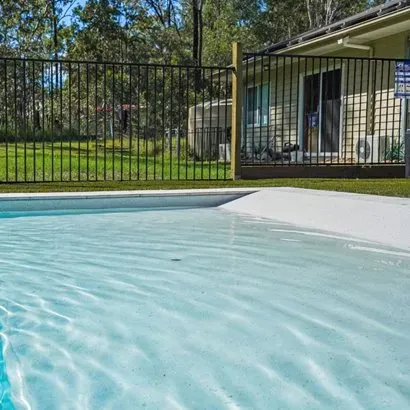
Fencing placement is often treated as a purely regulatory box to tick, and while compliance with New South Wales pool safety legislation is non-negotiable, the placement of fencing within those rules has a big impact on how the space actually feels. A fence positioned without thought for sightlines, gate placement, or the flow between indoor and outdoor areas can make a beautifully built pool feel cramped and disconnected from the rest of the home. Think about where you will enter and exit the pool area from the house, where you will want to sit and observe if children are swimming, and how the fence interacts with the garden and landscaping beyond it. These are conversations worth having early.
What To Do Next
If you are planning a pool for spring or summer and you have not yet worked through your landscaping, decking, coping, drainage, or fencing decisions, now is genuinely the right time to start. The quieter weeks of late autumn and winter are when the planning happens that makes everything run smoothly once the warmer weather arrives.
Coastline Pools works with Newcastle and Hunter Region homeowners and builders to think through these decisions as a whole, not as a series of afterthoughts. Getting your surrounds considered during the design and build phase rather than scrambling to fix them afterward is the difference between a pool space that feels complete and one that always seems like a work in progress.
Reach out to the Coastline Pools team to start a conversation about your project. Whether you have a clear vision or you are just beginning to think things through, we are happy to help you work out what your block needs and what the process looks like from here.
Join us to find out more!
Contact Us
We will get back to you as soon as possible.
Please try again later.
Find all the latest news and offers from the Coastline Family!